
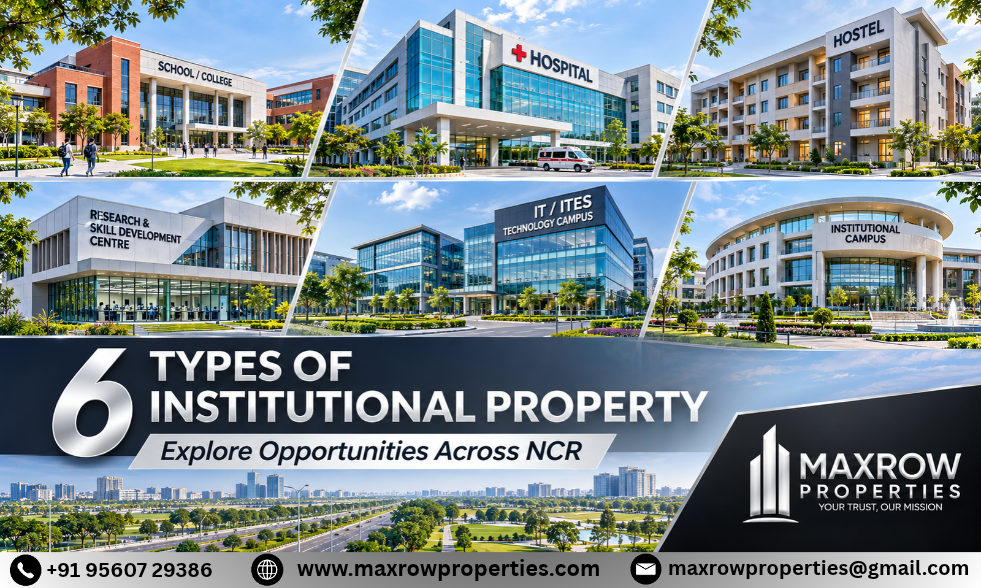
Institutional real estate matters a lot for education, healthcare, research, training and other essential services. Cities keep growing. New residential and commercial hubs keep coming up. Because of this, the demand for land and buildings fit for use keeps creating chances for investors, developers, trusts and organisations.
Unlike usual commercial properties, institutional properties are mostly meant for specific purposes. These purposes include education, medical care, research, training or facilities that serve the public. The value of properties depends on things like location, land-use permissions, accessibility, infrastructure, the population around them and development potential.
Some buyers are looking for institutional property for sale. For these buyers, understanding the categories of institutional real estate is essential. This understanding matters before making an investment or planning a development project.
This guide explains six types of institutional properties. This guide also covers their uses, buying considerations and how to spot suitable institutional real estate opportunities in growing markets.
What Is Institutional Property?
Institutional property refers to land or buildings designated, developed or used for institutional activities. These properties may accommodate schools, colleges, universities, hospitals, hostels, research centres, training institutes, healthcare facilities and other approved institutional uses.
Institutional real estate is different from regular residential or commercial property because its permitted use may be restricted by the applicable land-use plan, development authority regulations, building approvals and other legal requirements.
Depending on the location and planning regulations, institutional properties may be available as vacant plots, authority-allotted land, leasehold properties, resale plots, existing institutional buildings or developed campuses.
Buyers should always confirm the permitted land use and applicable approvals before purchasing.
6 Types of Institutional Property for Sale
1. School and College Properties
Educational properties are one of the well-known types of institutional real estate. People build these spaces for learning of all kinds, from school-level teaching to college, vocational training and professional courses.
Land for institutions can be used for:
- Primary and secondary schools
- Senior secondary schools
- International schools
- Degree colleges
- Engineering and technical colleges
- Management institutes
- Universities
- Coaching and training centres
- Skill development institutes
Schools and colleges need more than just classrooms. Based on what the institution needs, the property may also require offices, labs, libraries, playgrounds, auditoriums, parking areas, student facilities and other supporting infrastructure.
Location matters a lot for properties. Places with a growing number of homes, good road links, public transport access and solid infrastructure tend to draw organisations that are planning new campuses.
Who should consider educational institutional property?
- Educational trusts and societies
- School operators
- University groups
- Private education companies
- Coaching institute operators
- Skill development organisations
- Investors planning education-related developments
When purchasing a school or college plot, buyers should check the institutional land-use category, permitted educational activity, plot area, road width, Floor Area Ratio (FAR), building regulations and applicable authority approvals.
2. Hospital and Healthcare Properties
Healthcare buildings are made for care, looking after patients, health facilities and things like that. As more housing colonies, factory zones and city crowds come up, the need for health facilities can go up too.
Hospital and health property types can include:
- specialty hospitals
- General hospitals
- Nursing homes
- Medical colleges
- Diagnostic centres
- Mother and child hospitals
- Rehabilitation centres
- Medical research facilities
- Healthcare training institutes
- Wellness and specialised care facilities
Health properties usually need special setups. I mean things like entry for emergencies, spaces for patients, areas for medical machines, surgery rooms, test rooms, parking, power backup and other services.
If you are building a hospital, you should check the spot based on where patients come from, how easy it is to reach, the people living around, road links, nearby housing areas and health facilities by.
Who should consider hospital institutional property?
- Hospital groups
- Doctors and healthcare entrepreneurs
- Medical trusts
- Healthcare investors
- Diagnostic service providers
- Medical college operators
- Rehabilitation and specialised healthcare organisations
Before purchasing a hospital plot, buyers should verify land-use permissions, development norms, permissible FAR, road frontage, building approvals, utility infrastructure and the requirements applicable to the planned healthcare facility.
3. Hostel and Student Accommodation Properties
Hostels and institutional accommodation facilities help schools, training centres, universities and other organisations that need rooms for students, staff or trainees.
Hostel‑related institutional properties may be considered for:
- Student hostels
- University accommodation
- Residential coaching facilities
- Training institute hostels
- Working or trainee accommodation where permitted
- Staff accommodation associated with institutions
Where a hostel sits matters. People who live there need to get to schools, buses, food shops and basic services without a lot of trouble. They also need handy stuff nearby.
Homes near university campuses, education hubs, colleges, training centres and areas with institutions may draw the eye of operators who plan places for people to stay.
A hostel or place to live is not just allowed on every plot meant for an institution. Buyers have to ask the authority if hostel use is allowed on its own or as a side activity tied to an approved institution.
Big things to think about when buying hostel property:
- What the land is allowed to be used for
- Planning for how many people can stay
- Getting around and transport links
- Water supply and toilets
- Fire safety rules
- Building design and approvals
- Parking and movement of people and vehicles
- Rules that apply to hostels and places to stay
Hostel property tied to an institution can be a choice for groups planning campus housing. You must confirm the allowed use before you buy.
4. Research, Training and Skill Development Properties
Schools and training groups need places. These are for learning, hands-on work, trying things, getting better at a job and coming up with new ideas.
These kinds of buildings might work well for:
- Research and development centres
- Vocational training institutes
- Technical training centres
- Professional education institutes
- Innovation centres
- Laboratories
- Industry training campuses
- Skill development facilities
- Educational research institutions
What the place needs depends on what people do. It could need labs, workshops, classrooms, rooms for gear, special utilities, office space and basic support systems.
A spot close to industry areas, school hubs, tech parks or big business centres might be a fit for research and training sites. That depends on what the land's allowed to be used for and what infrastructure is needed.
Who should consider research and training properties?
- Private training organisations
- Educational trusts
- Corporate training providers
- Technical institutes
- Research organisations
- Vocational education companies
- Industry-focused skill development centres
Buyers should evaluate the property's permitted institutional use, infrastructure requirements, electricity capacity, road access, plot size, building permissions and suitability for the planned activity.
5. IT/ITES and Technology Campus Properties
IT and ITES institutional properties are associated with technology-based businesses, information technology services, software development, corporate research and other permitted technology-related activities.
These properties may include land or campuses planned for:
- IT parks
- IT/ITES campuses
- Technology centres
- Software development facilities
- Corporate research centres
- Data-related infrastructure, where permitted
- Innovation and technology hubs
- Business technology campuses
IT/ITES properties may require modern infrastructure, high-speed connectivity, reliable electricity, office space, parking, security, building services and supporting facilities.
Areas with access to expressways, metro corridors, established commercial zones, technology clusters and business districts may be considered by organisations planning technology campuses.
Who should consider IT/ITES institutional property?
- IT companies
- Software development companies
- Technology businesses
- IT park developers
- Corporate groups
- Research and innovation organisations
- Investors in technology infrastructure
Before acquiring IT/ITES land, buyers should check the approved use category, building regulations, permissible FAR, connectivity, power infrastructure, utilities and development authority conditions.
6. Other Institutional and Specialised Properties
Apart from schools, colleges, hospitals and technology campuses, institutional real estate can include several other specialised facilities, depending on the applicable land-use classification and local planning regulations.
Examples may include:
- Religious and spiritual institutions
- Community and cultural centres
- Public-serving institutional facilities
- Professional institutes
- Educational administration centres
- Specialised training facilities
- Institutional campuses with multiple approved uses
These properties may have different requirements for land area, access, visitor management, building design, utilities, parking and operational infrastructure.
For buyers interested in specialised institutional properties, it is important to identify the intended activity first and then select land or buildings where the relevant use is legally permitted.
A property's existing use should not be assumed to establish permission for a different institutional activity. Land-use documentation and authority approvals must be reviewed before the transaction.
Institutional Property vs Commercial Property
Institutional and commercial properties serve different purposes and are subject to different permitted uses and planning conditions.
|
Comparison |
Institutional Property |
Commercial Property |
|
Primary purpose |
Education, healthcare, research, training and other institutional activities |
Business, retail, office and commercial activities |
|
Common examples |
Schools, colleges, hospitals, hostels and research centres |
Offices, shops, malls, showrooms and commercial buildings |
|
Permitted use |
Institution-specific and authority-approved uses |
Commercial activities as permitted by the applicable zoning |
|
Typical buyers |
Trusts, educational groups, healthcare operators and institutional developers |
Businesses, retailers, investors and commercial developers |
|
Infrastructure |
May require specialised facilities for the institution |
Generally designed for commercial operations |
|
Development regulations |
Subject to institutional land-use rules and approvals |
Subject to commercial zoning and development regulations |
Institutional property should not be purchased with the assumption that it can be converted into a commercial or residential property later. Any change in land use requires the relevant permissions and may not be allowed.
Why Institutional Properties Are in Demand
Institutional real estate is attracting interest from organisations planning new facilities and investors evaluating land for long-term development.
Growing Educational Infrastructure
Expanding residential areas can create demand for schools, colleges, training institutes and educational facilities. Educational organisations may seek properties closer to growing communities and accessible transport routes.
Healthcare Infrastructure Expansion
Hospitals, clinics, diagnostic centres and specialised medical facilities may require new land and buildings as urban populations grow and healthcare services expand.
Development of New Urban Areas
New sectors, residential developments, industrial clusters and infrastructure corridors can create opportunities for institutional development where land use permits.
Long-Term Development Planning
Institutional projects often require substantial planning, construction, approvals and operational preparation. Buyers may acquire suitable land in advance of their development plans, subject to financial, legal and regulatory considerations.
Specialised Infrastructure Requirements
Schools, hospitals, universities, research centres and training campuses require facilities designed around their operational needs. Suitable institutional properties may provide a starting point for such developments.
What to Check Before Buying Institutional Property for Sale
Buying institutional property requires careful evaluation beyond the plot price and location.
1. Verify the Land Use
Confirm whether the property is designated for the institutional activity you intend to develop. A school plot, hospital plot, IT/ITES plot or other institutional property may have different permitted uses and restrictions.
2. Check Authority Documents and Ownership
Review the allotment letter, lease deed, title documents, transfer permissions, ownership records and other applicable documentation. Where authority-allotted property is involved, verify the relevant authority's conditions and transfer requirements.
3. Evaluate Plot Size and FAR
The plot area and permissible Floor Area Ratio determine the potential development area, subject to applicable regulations. Check whether the property can accommodate your proposed building, facilities and supporting infrastructure.
4. Assess Road Width and Accessibility
Road frontage and access are important for schools, hospitals, universities, hostels and other institutional facilities. Consider buses, ambulances, visitors, employees, students and service vehicles according to the proposed use.
5. Review Infrastructure Availability
Evaluate electricity, water supply, drainage, sewerage, telecom connectivity, internal roads and other infrastructure required for the institution.
6. Understand Development and Construction Regulations
Check building regulations, setbacks, height restrictions, parking requirements, fire safety, environmental requirements and approvals applicable to the intended development.
7. Evaluate the Surrounding Area
Review nearby residential populations, infrastructure, educational facilities, healthcare facilities, transport connectivity, commercial activity and future development plans.
8. Confirm the Financial and Transaction Details
Review the acquisition price, payment schedule, applicable taxes, authority dues, transfer charges, lease obligations and other costs associated with the transaction.
Institutional Property Opportunities in Noida, Greater Noida, YEIDA and Faridabad
The Noida, Greater Noida, Yamuna Expressway and Faridabad regions have institutional real estate opportunities across different sectors and development zones. Buyers may evaluate these locations based on connectivity, surrounding development, authority land-use categories and their planned institutional project.
Noida
Noida offers established sectors, expressway-connected locations, commercial infrastructure and residential catchments. Institutional buyers may evaluate sectors and locations where school, college, hospital or IT/ITES uses are permitted.
Greater Noida
Greater Noida includes planned sectors and educational hubs such as Knowledge Park. Buyers looking for school, college, university, healthcare or training institute properties may evaluate locations according to their project requirements and the permitted land use.
YEIDA and Yamuna Expressway
The Yamuna Expressway region is being developed across multiple sectors and land-use categories. Buyers may explore institutional land opportunities for educational campuses, healthcare facilities, training centres and other approved institutional developments.
Faridabad
Faridabad has established residential, industrial and commercial areas. Institutional property buyers may evaluate suitable locations for hospitals, educational facilities, healthcare centres and other institutional developments based on land-use permissions and connectivity.
The suitability of a location depends on the proposed project, authority regulations, available property and buyer requirements. Location alone does not guarantee demand, investment returns or project approvals.
How Maxrow Properties Helps Buyers Find Institutional Property for Sale
Maxrow Properties assists buyers, investors, developers and organisations looking for institutional real estate opportunities across Noida, Greater Noida, YEIDA, Faridabad and other relevant NCR locations.
The company deals in different institutional property categories, including school and college plots, hospital plots and IT/ITES land. Buyers can discuss their requirements based on the proposed institution, preferred location, land area, budget and development plans.
Maxrow Properties can assist with:
- Identifying institutional property options
- School and college plot requirements
- Hospital and healthcare land requirements
- IT/ITES land and technology campus requirements
- Location and property shortlisting
- Buyer-focused property consultation
- Site visits and property evaluation
- Documentation and due diligence coordination
- Commercial negotiations
- Transaction and transfer process guidance
The company helps buyers explore available institutional property options and understand the transaction process before proceeding with an acquisition.
Institutional Property Categories Available Through Maxrow Properties
School and College Plots: Land options for schools, colleges, universities, coaching institutes, vocational centres and educational facilities, subject to permitted use.
Hospital Plots: Institutional land opportunities for hospitals, medical facilities, diagnostic centres, nursing homes and healthcare-related developments, subject to approvals.
IT/ITES Land: Land options for technology campuses, IT/ITES facilities, software development centres and other permitted technology-related uses.
Institutional Land in NCR: Property opportunities across selected locations in Noida, Greater Noida, YEIDA and Faridabad, depending on availability and buyer requirements.
Buyers can share their proposed institutional activity, budget, land requirement and preferred location with Maxrow Properties to shortlist relevant options.
Conclusion
Institutional real estate includes types of properties like schools, colleges, hospitals, hostels, research centers, training institutes, IT and ITES campuses and other specialized developments.
Each of these has needs when it comes to infrastructure, how the land can be used, government rules and where the property is located. Buyers must look closely at the property, check all documents, confirm approvals from authorities, assess transport links, measure the plot size, examine existing infrastructure and think about how the property will be used before investing.
For those looking for institutional property for sale in Noida, Greater Noida, YEIDA and Faridabad, Maxrow Properties provides property consultation and offers institutional land in selected categories.
Whether the goal is to set up a school, college, hospital, healthcare center, training institute or a technology campus, picking the property is a crucial first step for a successful institutional development project.
Frequently Asked Questions (FAQs)
1. What is institutional property?
Institutional property refers to land or buildings intended for approved institutional activities such as education, healthcare, research, training, technology campuses and other specialised uses.
2. What types of institutional property are available for sale?
Institutional property categories may include school plots, college plots, university land, hospital plots, healthcare facilities, hostel properties, research centres, training institutes, IT/ITES land and other specialised institutional properties, depending on permitted land use.
3. Can I buy institutional property for a school or college?
Yes, buyers and eligible educational organisations can explore school and college institutional plots. However, land-use permissions, eligibility conditions, authority regulations, building approvals and educational requirements must be checked before acquisition.
4. Are hospital plots available for institutional development?
Hospital and healthcare institutional plots may be available in selected locations. Buyers should evaluate the approved land use, plot size, road access, development regulations, infrastructure and permissions required for the planned healthcare facility.
5. Can hostels be developed on institutional property?
Hostels may be permitted on certain institutional properties as an independent or ancillary use, depending on the applicable land-use regulations and approvals. Buyers should confirm the permitted accommodation use before purchasing.
6. Where can I find institutional property for sale in NCR?
Institutional property opportunities may be available in Noida, Greater Noida, YEIDA, Faridabad and other NCR locations. Availability and permitted uses vary by sector, authority and property.
7. What documents should I check before buying institutional property?
Buyers should review ownership documents, authority allotment records, lease deeds, land-use permissions, transfer approvals, encumbrance details, applicable dues and other relevant legal documents.
8. Is institutional property suitable for long-term investment?
Institutional property may be considered for long-term development or investment, depending on the location, permitted use, acquisition cost, infrastructure, project feasibility, market demand and legal conditions. Returns and appreciation are not guaranteed.
9. Does Maxrow Properties deal in institutional properties?
Yes. Maxrow Properties deals in institutional property categories including school and college plots, hospital plots and IT/ITES land in selected NCR locations. Buyers can contact the company to discuss suitable options.
10. How can I find institutional property for sale through Maxrow Properties?
You can visit the Maxrow Properties institutional page or contact the team with your preferred location, intended institutional use, land area, budget and project requirements to explore available property options.
Frequently asked questions
No FAQs available for this blog.